Properties, applications and how to choose
Aramid yarn does not melt, barely creeps under continuous load and performs reliably across a wide temperature range. Those properties are why engineers choose aramid when a product has to stay strong, stable and safe for years.
Choosing aramid is only the first decision, though. The yarn type, the linear density, the construction and the finish decide whether it performs in your application. This guide explains what aramid yarn is, where it is used and how to choose between the available types.
What is aramid yarn?
Aramid is short for aromatic polyamide. The para-aramid yarns TP works with combine high linear strength, high modulus and low elongation with good dimensional stability under load. That makes aramid one of the most versatile materials in TP’s high-performance portfolio, used wherever strength, stiffness, thermal resistance and long-term durability all matter. Meta-aramid filament yarn is available on request.
TP is not a fibre manufacturer, so the advice on whether aramid is the right material is independent. If a hybrid construction or another material fits the application better, TP says so. Our goal is finding the best fit for your specific application.
Six properties that matter in design
- High strength-to-weight ratio: high tensile strength without excess mass, which allows lightweight, strong constructions.
- High modulus and dimensional stability: low elongation and very low creep under continuous load, so a component keeps its length over a long service life.
- Thermal performance: aramid does not melt and stays reliable at elevated temperatures.
- Cut and chemical resistance: it resists cutting forces and aggressive chemicals, which suits safety-critical and industrial use.
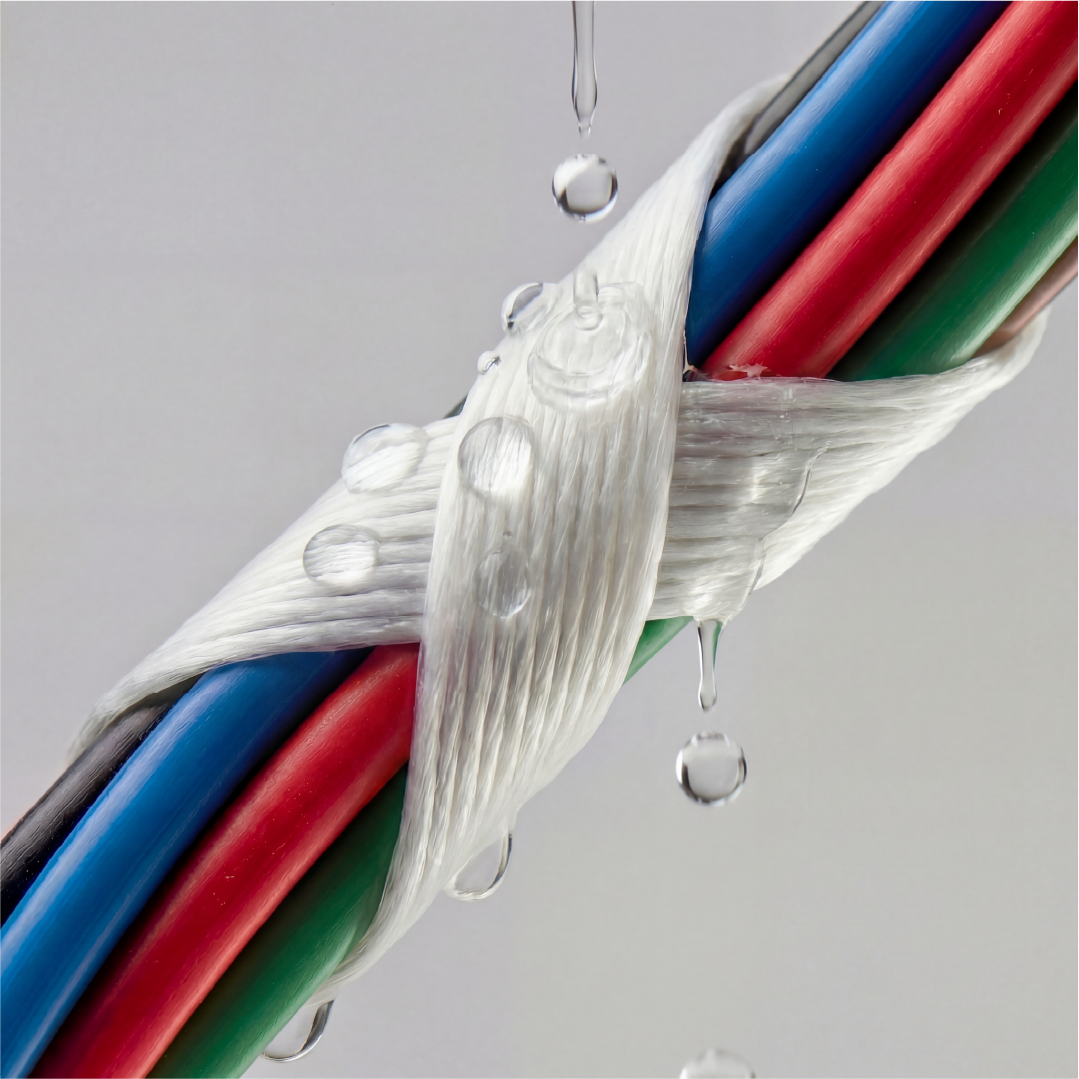
- Low flammability and electrical insulation: aramid is naturally flame resistant, has low thermal conductivity and does not conduct electricity, which suits protective and cable-related applications.
- Predictable service lifetime: ageing behavior is well defined under controlled conditions and can be extended with coatings and finishes.
Three types of aramid yarn: reference data
TP’s Premium Line aramid yarn comes in three performance types. The reference values below show how they differ.
| Type | Performance | dtex | Filaments | Breaking strength (N) | Tenacity (cN/dtex) | Elongation at break (%) | Modulus (GPa) |
| 931 | Regular | 1100 | 665 | 228 | 20.3 | 3.5 | 76 |
| 931 | Regular | 1670 | 1000 | 343 | 20.3 | 3.7 | 70 |
| 971 | High tenacity | 1100 | 665 | 268 | 23.8 | 3.6 | 89 |
| 971 | High tenacity | 1670 | 1000 | 402 | 23.8 | 3.7 | 85 |
| 300 | High modulus | 1580 | 1000 | 309 | 19.4 | 2.7 | 114 |
| 300 | High modulus | 3160 | 2000 | 627 | 19.4 | 2.7 | 108 |
In selection terms:
- Regular (931): a balanced choice where strength and stability are needed without extreme demands.
- High tenacity (971): the choice when tenacity decides the design, for example in lightweight constructions.
- High modulus (300): the choice when stiffness and low elongation matter most, for example in reinforcement that must not stretch under load.
Reference values, specific testing method applies. Tested with Instron. Detailed data sheets per type are available on request.
Where aramid yarn is used
TP supplies aramid yarn for ropes and cordage, performance and protective textiles, body armor and personal protection, cable reinforcement, industrial reinforcement and hybrid yarn constructions. Across TP’s industries, from lifting and rigging to belts and hoses and energy, the question is the same: what does the yarn have to do, and for how long?
Limits, and how to engineer around them
Aramid is sensitive to UV exposure and to certain forms of abrasion. These are design inputs, not dealbreakers. Finishes, coatings and engineered constructions mitigate both, and hybrid constructions blend aramid with other fibres to balance performance, durability and cost. Because TP converts, coats and assembles yarn in-house, these adjustments are made at yarn level, before the yarn reaches the customer’s process.
How to choose the right aramid yarn
TP selects and engineers aramid based on functional requirements, not material preference. In practice that follows the ADO model: Assess the application, Advise on aramid, a hybrid or another material, Design the yarn configuration, and Optimize it after testing. Linear density, construction, twist, coating, finish and color can all be tailored to the application.
Five questions are worth answering before you specify an aramid yarn:
- How much load does the yarn carry, and how much elongation is acceptable?
- At what temperature, and for how long?
- How much UV and abrasion exposure is there?
- Which process comes next: twisting, braiding, weaving, or coating?
- What service life does the end product need?
Want the full data? Talk to one of our experts about the right yarn configuration for your product.